Commonwealth Edison (ComEd) net metering
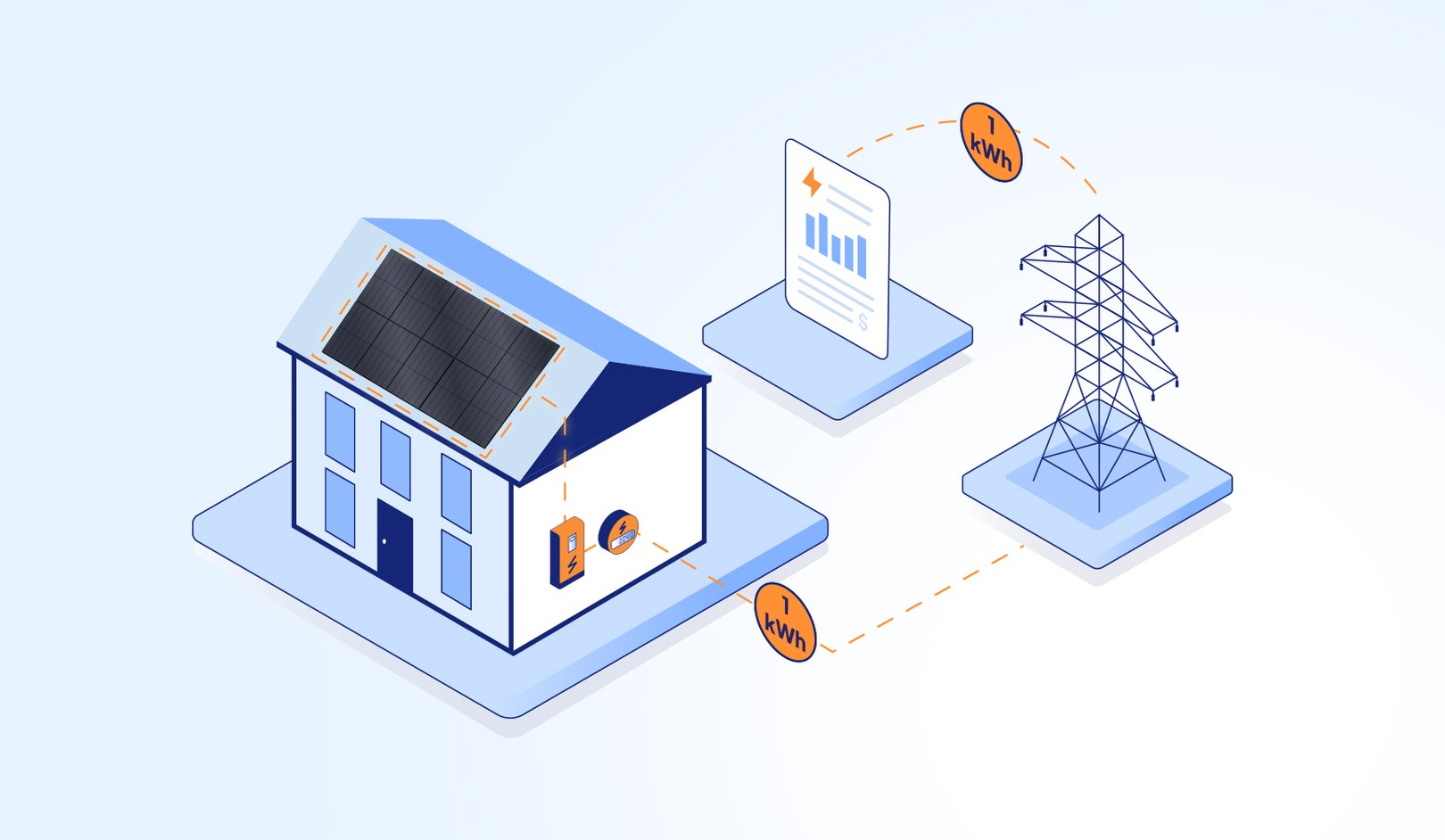
ComEd net metering allows customers to produce electricity to power their own home by installing a solar energy system. Customers with net metering send excess solar electricity to the grid in exchange for bill credits, which can then be used when they need to supplement their electricity production. ComEd has different rates and policies for net metering that are dependent on customer category.
ComEd offers net metering throughout their service area, which covers Chicago and other portions of northern Illinois, including but not limited to:
Belvidere
Chicago
Evanston
Freeport
Joliet
Kankakee
Rockford
Schaumburg
Sterling
Rates for net metering differ based on the program within which the customer is enrolled, rather than on the system size. ComEd residential customers can either be enrolled in the Basic Electric Service (BES) or the Basic Electric Service Hourly Pricing (BESH).
BES customers pay a flat rate for electricity, and that is the rate at which net metering credits are counted. BESH customers pay different rates every hour based on the overall demand for electricity at that time. BESH customers’ net metering credits are based on the value of the electricity at the time their system produced the electricity. The ComEd website has detailed information about current rates and tariffs for both types of payment plans.
The net metering cap for Commonwealth Edison is equivalent to five percent of the total peak demand supplied by the utility during the previous year. Individual systems are also capped in size – a single solar array can be no larger than 2 MW, and must be sized to meet the customer’s electricity demand.
ComEd also recommends (but does not require) that solar system size not exceed 80 to 90 percent of total household energy use. They recommend this because extra energy credits disappear at the end of each year and do not benefit the customer, so a system that overproduces will not benefit the customer and will just cost more to install.
ComEd is not the only utility in Illinois that offers net metering. Ameren Illinois Utilities and the MidAmerican Energy Company are both also required by the state to provide net metering options. As a result, both MidAmerican Energy Company’s and Ameren’s programs have the same basic size and electricity rate policies as ComEd.
ComEd net metering bill credits are applied differently depending on whether you are a customer enrolled in the Basic Electric Service (BES) or the Basic Electric Service Hourly Pricing (BESH).
BES customers: Net metering bill credits are applied to their next month’s energy bill. Credits expire at the end of the year, typically either April or October, depending on when the customer joined the net metering program.
BESH customers: Granted a monetary credit at the end of the month, based on electricity produced.
ComEd doesn't have specific solar incentives for its customers, but all Illinois solar system owners can sell the solar renewable energy credits (SRECs) that their solar energy systems produces. SRECs are a policy tool primarily designed to incentivize solar production, and they can result in significant additional savings for property owners with solar.
To qualify for interconnection, systems must meet the Institute of Electrical and Electronics Engineers (IEEE), Underwriters' Laboratory, and the National Electrical Code.
ComEd interconnection applications are classified by the size and type of generating facility being installed. Each level has a different time horizon and interconnection cost, as shown in the following table:
Level | Size | Review Time | Interconnection Cost |
|---|---|---|---|
Level 1 | < 25 kW and lab-certified | Up to 22 business days | $50 |
Level 2 | < 5 MW and lab-certified | Up to 30 business days | $100.00 plus $1.00/kVA |
Level 3 | < 10 MVA and DG facility | Up to 35 business days | $500.00 plus $2.00/kVA |
Level 4 | < 10 MVA and does not | 3-10 business days, | $1,000.00 plus $2.00/kVA |
You wouldn’t buy a car without comparing a few options first.
Shouldn’t solar be the same?
Compare multiple solar quotes on EnergySage
With EnergySage, you can compare your solar options when you receive quotes from the best local solar installers near you.
Most homeowners save around $60,000 over 25 years
- Vetted installers
- Unbiased advice
- Completely free
Get a quick estimate of your savings with solar
Find out how affordable solar is for your home with our Solar Calculator, or simply register your property today to get quotes.


Avoid peak rates and keep your essentials running, even when your street loses power.
