Pacific Gas & Electric (PGE) net metering
Here’s how PG&E credits your extra solar power—and how to get the most out of it.
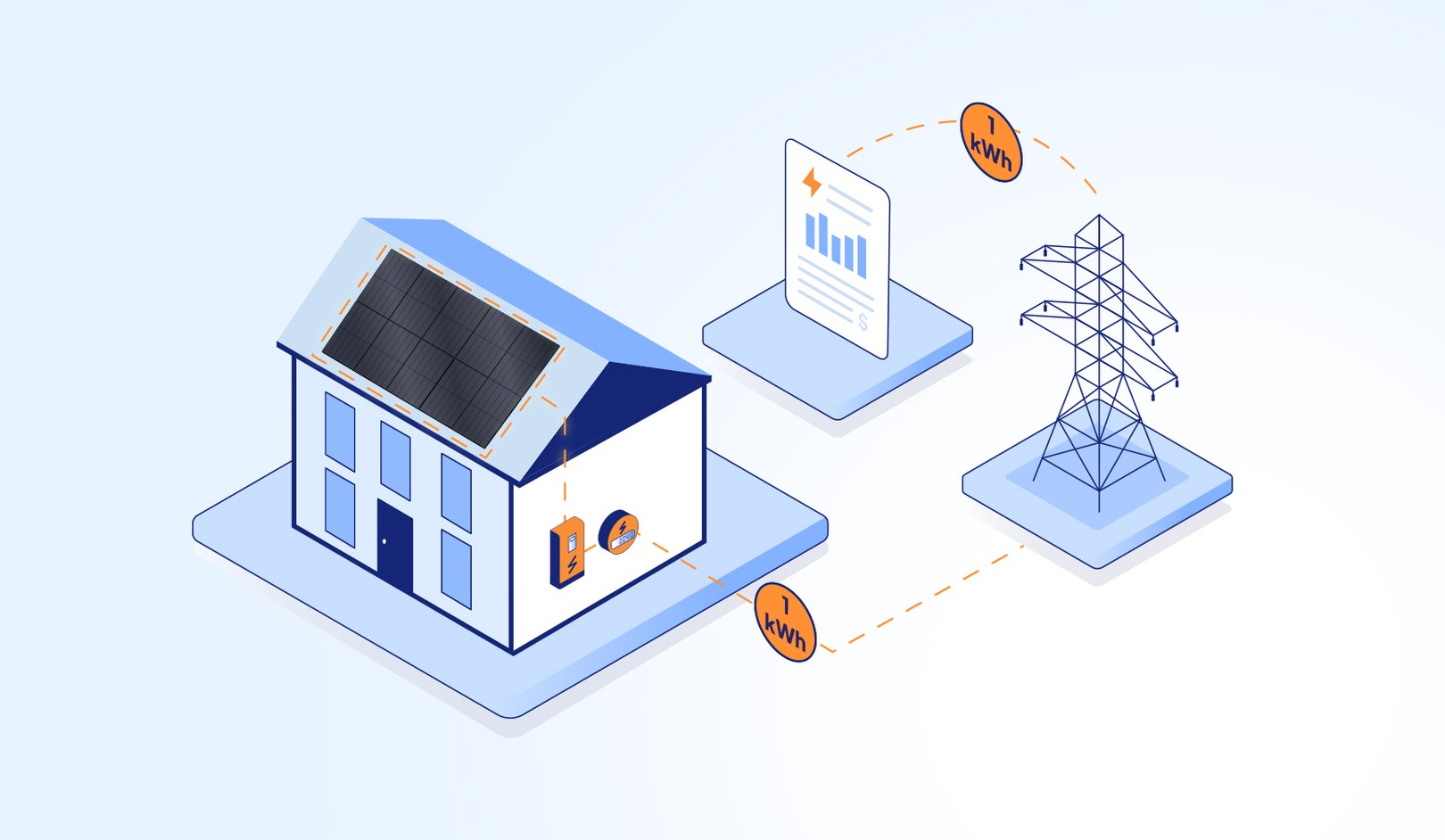
If you go solar in Pacific Gas & Electric (PG&E) territory, your panels will sometimes make more electricity than your home can use, especially on sunny afternoons. What happens to that extra power plays a big role in how much money solar saves you.
PG&E enrolls customers who go solar in its Solar Billing Plan, which gives you bill credits for the electricity your system sends to the grid. But under this plan, the solar power you use at home is usually worth more than what you send to the grid. So, timing your energy use, or adding a battery to store extra power for later, can help you save even more.
Net metering is a billing setup for grid-connected solar owners. When your panels make more electricity than you need, the extra power goes to the grid, and you get credits on your electric bill. When your panels make less than you need, like at night, you draw power from the grid and use those credits to pay for it.
Under traditional net metering, it’s a one-to-one exchange: A kilowatt-hour (kWh) of solar energy you send to the grid is worth the same as a kWh you buy from it. But PG&E’s Solar Billing Plan works a little differently. How much each credit is worth depends on when you send the power to the grid. In general, a kWh you export earns less than what a kWh you buy from PG&E costs. That’s why using as much of your own solar power as you can is the best way to maximize your savings.
What are Pacific Gas & Electric’s rates and prices for net metering?
In PG&E territory, your export credits change depending on when you send power to the grid. Credits are generally highest from 4 p.m. to 9 p.m. and during the summer, when the grid needs power most. They're generally lowest from 6 a.m. to 4 p.m. and during the winter. That timing roughly follows PG&E’s time-of-use (TOU) rates, so you tend to earn the most for your exports during the same hours when grid electricity costs the most.
These credit values come from California’s net energy metering policy, often called NEM 3.0, which the California Public Utilities Commission (CPUC) sets. PG&E bases each credit on its “avoided cost rate,” roughly, how much it’s worth to the grid for you to supply that power during a given hour.
Here’s a quick look at how the Solar Billing Plan works:
|
|
| |
|---|---|---|---|
Credits for exported electricity |
| Avoided cost rate | |
Non-bypassable charges (NBCs) |
| Paid on all electricity you pull from the grid | |
System size regulations |
| System can be up to 50% larger than your current electricity needs, if you attest that you’ll need it in the future | |
Billing |
| Monthly; credits roll over for 12 months | |
Interconnection fee |
| $94 for systems under 1 MW | |
Electricity rate |
| Specific “electrification” time-of-use rates that vary by time of day and season |
What will happen to my excess PG&E net metering bill credits?
If your solar panel system is sized to cover your electricity use for the full year, you’ll probably make more power than you need in some months and less in others. In months when you make more than you use, you’ll earn credits on your PG&E bill that you can use later in the same 12-month billing cycle.
At the end of the year, PG&E settles your account on your True Up Statement. The program is designed to offset your electricity usage, not eliminate your bill or serve as a source of income, so if you exported more electricity than you imported, those extra credits may be adjusted down at that point. You may still be paid for that surplus generation, just at the Net Surplus Compensation Rate (NSCR) rather than the avoided cost rate.
Pacific Gas & Electric offers its Solar Billing Plan to most people in its service area, which spans the state of California from as far south as Bakersfield to just below the Oregon border. However, there are a few exceptions: some areas in San Francisco and Oakland don’t qualify for net metering.
PG&E doesn’t offer solar incentives to every homeowner, but income-qualified households in its territory may qualify for the CPUC’s Disadvantaged Communities – Single-family Solar Homes (DAC-SASH) program.
Income-qualified customers can also save on their electric bills through two discount programs:
California Alternate Rates for Energy (CARE): 32.5% discount on electric bills
Family Electric Rate Assistance Program (FERA): 18% discount on electric bills
The last step before your solar panels go live is interconnection, which means getting PG&E’s approval to connect your system to the grid. Your solar installer usually submits the request for you. It lets PG&E know you have solar and confirms your system is safe to run.
As part of the review, PG&E checks your installation to ensure that it complies with:
All PG&E regulations for interconnection (known as “Rule 21”)
Requirements for your electrical panel
The National Electrical Code
Any other applicable local codes
The interconnection request fee is $94 for PG&E customers.
Most homeowners save around $60,000 over 25 years
- Vetted installers
- Unbiased advice
- Completely free



Avoid peak rates and keep your essentials running, even when your street loses power.
