Los Angeles Department of Water and Power (LADWP) net metering
Here’s how LADWP credits your extra solar power—and how to get the most out of it.
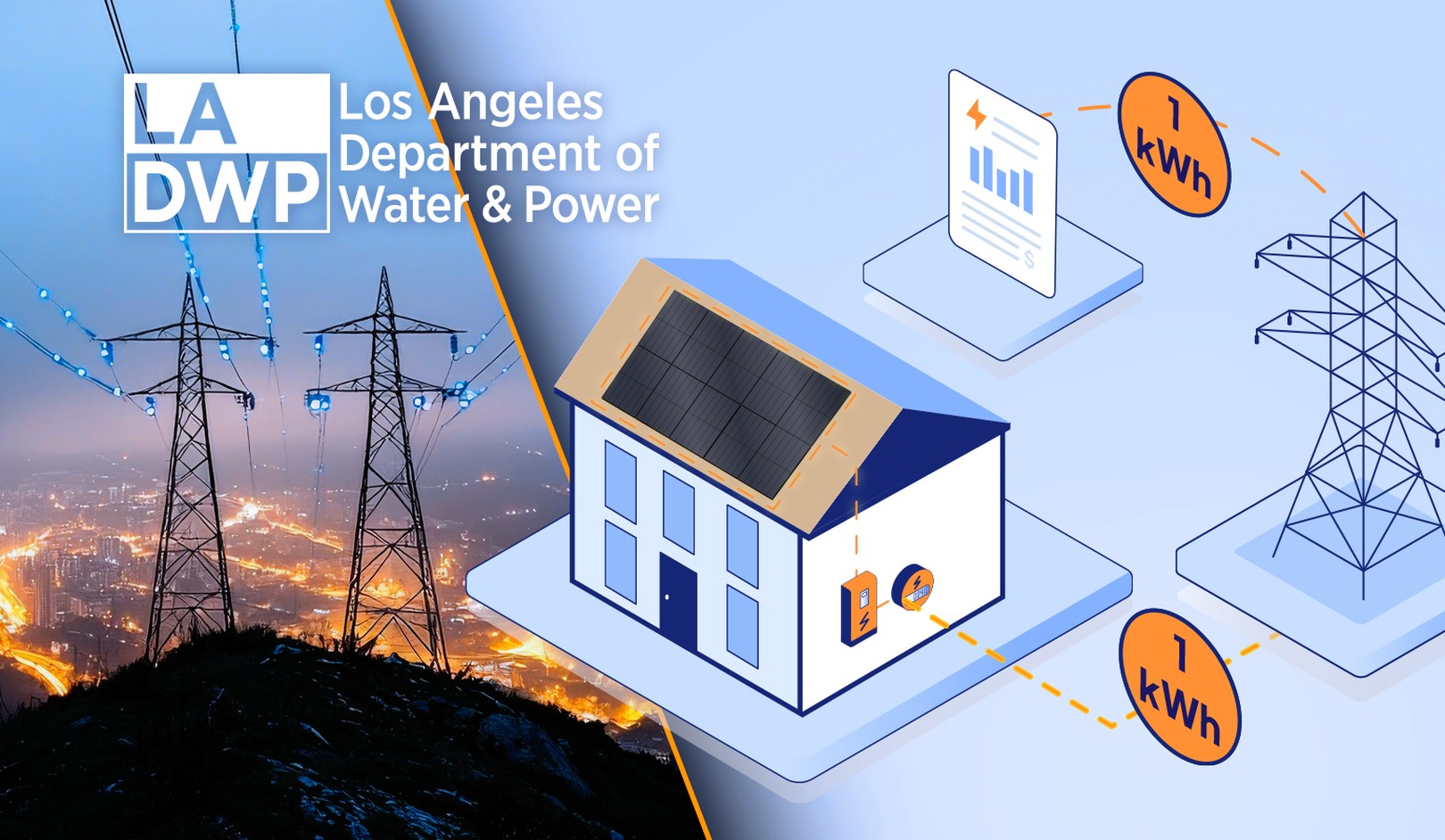
If you go solar in Los Angeles Department of Water & Power (LADWP) territory, your panels will sometimes make more electricity than your home can use, especially on sunny afternoons. What happens to that extra power plays a big role in how much money solar saves you.
LADWP enrolls customers who go solar in its Net Energy Metering (NEM) program, which gives you bill credits for the electricity your system sends to the grid. Under this plan, the solar power you use at home is generally worth the same as what you send to the grid. If you’re on a time-of-use plan, timing your energy use or adding a battery to store extra power for later can help you save even more.
Net metering is a billing setup for grid-connected solar owners. When your panels make more electricity than you need, the extra power goes to the grid, and you get credits on your electric bill. When your panels make less than you need, like at night, you draw power from the grid and use those credits to pay for it.
What are Los Angeles Department of Water & Power’s rates and prices for net metering?
LADWP’s rates and prices for net metering are equivalent to the amount that you pay per kWh for your electricity, whether that’s the standard rate or time-of-use rates.
In 2023, the California Public Utilities Commission (CPUC) famously shifted NEM pricing from the retail rate to the “avoided cost rate”, which is roughly based on what it’s worth to the grid for you to supply that power during a given hour. However, LADWP is a municipal utility, not a state company, and is therefore not required to adopt the CPUC’s NEM 3.0 rules. Instead, LADWP maintains that one-to-one exchange rate.
What will happen to my excess LADWP net metering bill credits?
If your solar panel system is sized to cover your electricity use for the full year, you’ll probably make more power than you need in some months and less in others. In months when you make more than you use, you’ll earn credits on your LADWP bill that you can use later (except against taxes and minimum charges). Your export credits can roll over indefinitely, but if you terminate service with a credit balance, you won’t receive compensation for those credits.
Los Angeles Department of Water & Power offers NEM to eligible customers in its service area, which includes the city of Los Angeles and portions of Culver City, South Pasadena, and West Hollywood.
LADWP no longer offers rebates for solar owners, but eligible homeowners may qualify for fixed annual payments of up to $900 for 20 years through the Solar Rooftops program. There’s a catch to this program, though: LADWP owns the solar panel systems and receives all of the energy generated, so participating homeowners can’t enroll in net metering or directly power their homes with solar.
As a municipal utility company, LADWP customers are ineligible for some California state solar incentives, like CPUC’s Disadvantaged Communities – Single-family Solar Homes (DAC-SASH) program.
The last step before your solar panels go live is interconnection, which means getting LADWP’s approval to connect your system to the grid. Your solar installer usually submits the request for you. It lets LADWP know you have solar and confirms your system is safe to run.
As part of the review, LADWP checks your installation to ensure that it complies with:
All LADWP regulations for interconnection
Requirements for your electrical panel
The National Electrical Code
Any other applicable local codes
The interconnection expenditure recovery fee is $130 for LADWP customers.
Most homeowners save around $60,000 over 25 years
- Vetted installers
- Unbiased advice
- Completely free



Avoid peak rates and keep your essentials running, even when your street loses power.
