As California braces for a ‘super’ El Niño, the value of solar and storage is evident
Here’s why solar homeowners should add a battery
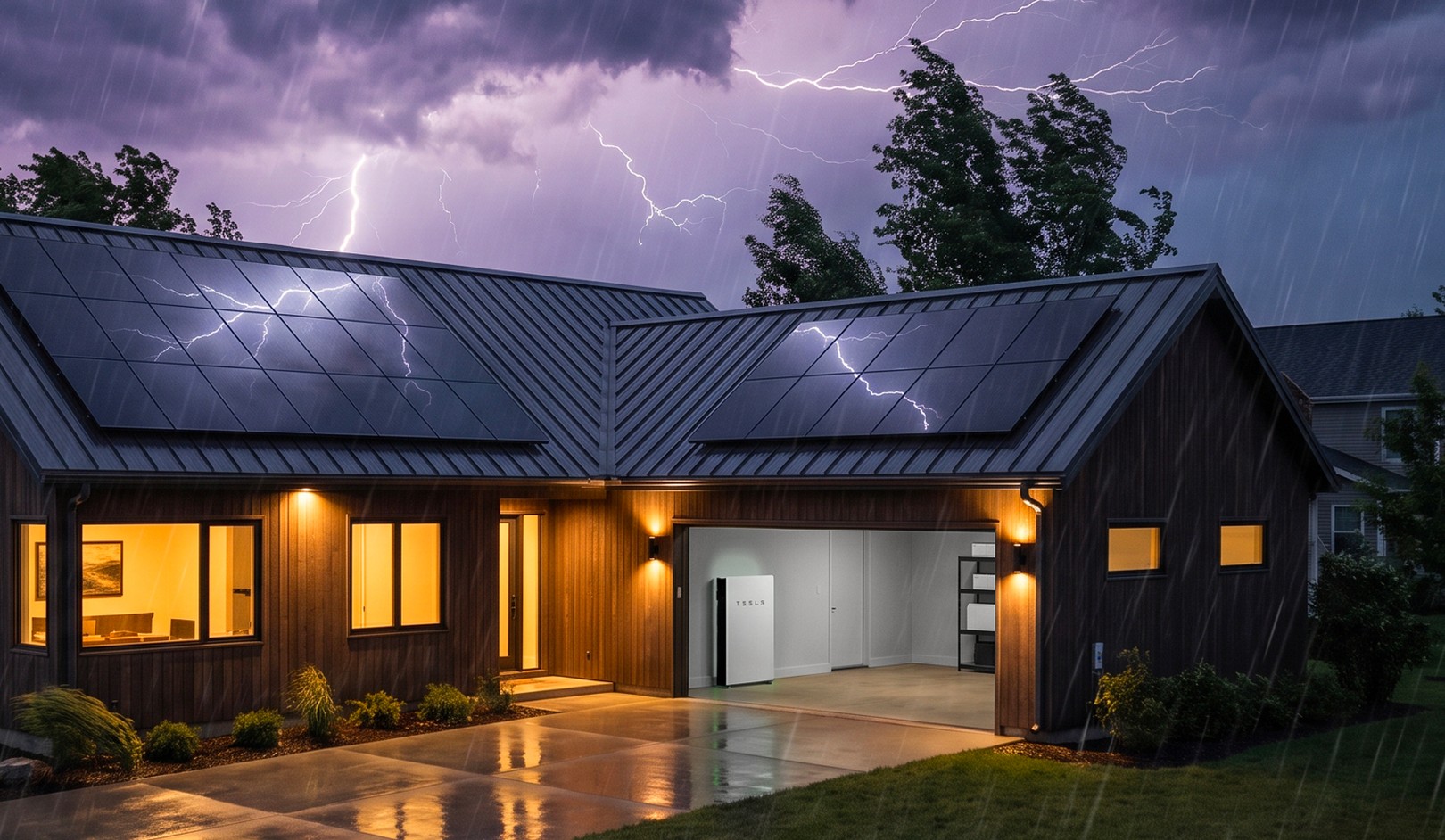
On September 21, 2026 Governor Gavin Newsom declared a statewide emergency to get California ready for what could become the strongest El Niño in recorded history. State officials are warning of heavy rain, strong winds, flooding, landslides, and power outages over the coming months.
If you already have solar panels, or you've been thinking about getting them, that forecast raises a fair question: what happens to your system (and your power) when storms hit?
KEY TAKEAWAYS
Federal forecasters give El Niño a greater than 90% chance of being very strong this winter, and Governor Newsom has declared a statewide emergency.
Solar panels are built to handle wind and rain, but grid-tied systems without a battery will shut off automatically during a power outage.
A home battery paired with solar can power essentials like your fridge, lights, and Wi-Fi for about two days, but solar can recharge it when the sun comes out.
Before storm season, get your roof, mounting hardware, and gutters inspected, and trim branches that hang over your panels.
California's solar property tax exclusion is set to expire at the end of 2026, which gives Californians one more reason not to wait.
El Niño is a natural climate pattern in which ocean temperatures in the eastern tropical Pacific run warmer than usual. That extra warmth shifts storm tracks around the world, and for California, it often means a wetter, stormier winter.
This year's event is shaping up to be a big one. In its September update, NOAA's Climate Prediction Center said there's a greater than 90% chance of a very strong El Niño this fall and winter. The governor's office cites a 75% chance it could reach historic strength, which is why the emergency proclamation has directed state agencies to prepare cities and the National Guard to stand ready for flood response. State officials list power outages alongside flooding, landslides, and coastal damage as likely impacts.
Yes. Solar panels go through wind, hail, and load testing before they ever reach your roof, and heavy rain is more likely to do them good than cause harm.
"The panels were built for this," said Kyle Smith, general manager of California installer Solar Optimum. "They're wind tested and weather-rated, and rain is great in some ways, especially in California. It keeps them clean."
The bigger risks are the things around your panels: the roof underneath them and the trees above them. High winds bring down branches, and Smith has seen arrays damaged when a tree fell on them. A leak at a roof penetration can also cause water damage inside your home long before you notice it.
Here's what Smith recommends doing before the first big storm:
Get your roof and solar system inspected: Have someone check your roofing material, mounting hardware, and flashing (the seals around each roof penetration).
Clear your gutters and downspouts: Make sure there's nowhere on your roof where water can pool.
Trim branches: Reduce the risk of anything that could fall onto your roof or solar panels or drop debris in high winds.
Replace an aging roof now: "If you need a re-roof, now's the time to do it," Smith said. If you're going solar soon, a roof near the end of its life should come first anyway, since removing and reinstalling panels later can cost thousands of dollars.
An important safety note: Never climb onto your roof during or right after a storm. If something looks off, call your installer or a licensed roofer.
No, solar panels don’t work during power outages—at least, not on their own. This surprises many homeowners.
"A lot of people think that when there's an outage, they'll have power because they went solar. That's a common misconception,” Smith said.
Grid-tied solar systems are required by code to shut off when the grid goes down. This safety feature, called anti-islanding, keeps your panels from sending electricity into power lines that utility crews may be repairing, removing their risk of shock. So even with a full array on your roof, your house goes dark along with the rest of the block.
A battery changes that. With the right inverter setup, a solar battery disconnects your home from the grid and creates what Smith calls "a little microgrid just for your home." Your battery powers the house, and your panels recharge the battery whenever the sun is out.
It depends on how big your battery is and what you plug into it. A single battery in the 10 to 13.5 kilowatt-hour (kWh) range, like an Enphase or Tesla Powerwall, can run essentials for about two days with normal use, according to our calculations. Think refrigerator, Wi-Fi, phone charger, and a few lights.
Big appliances drain a battery fast. If you want to run an air conditioner, an electric range, or a whole-house fan, that same battery will only last roughly 11 hours, so you’ll likely need two or three of them. And El Niño adds a wrinkle: several cloudy days in a row means less sunshine to top your battery back up.
"When the grid goes down, you want to limit your use so you can salvage your battery power," Smith said. “Before an outage, decide which circuits matter most to you, and ask your installer to identify them or put them on a designated backup panel.”
Smith said interest in home batteries tends to jump after major outages and extreme weather—we’ve seen a similar trend through the EnergySage Marketplace. With El Niño all over the news, Smith said Solar Optimum is seeing more homeowners ask about both roofing and solar with energy storage.
"I think it starts with the roofing, and then they realize the value of having energy storage if the grid goes down as well," he said.
In California, the average home battery costs roughly $14,500 before incentives for 13.5 kWh of storage, based on EnergySage Marketplace quotes from the first half of 2026. That may seem steep, but state programs like the Emergency Load Reduction program (ELRP) and Demand Side Grid Support (DSGS) can lower the upfront cost and/or increase savings over time for eligible households.
Plug in for monthly energy-saving tips, climate news, sustainability trends and more.

Related articles
This prepper has a very realistic plan for the next grid-down emergency
Written by Kristina Zagame
Jun 5, 2026
5 min read



Avoid peak rates and keep your essentials running, even when your street loses power.
