Solar leases: What to know before you sign
Solar leases offer an accessible path to solar—here's what's changed and how to decide if one is right for you.
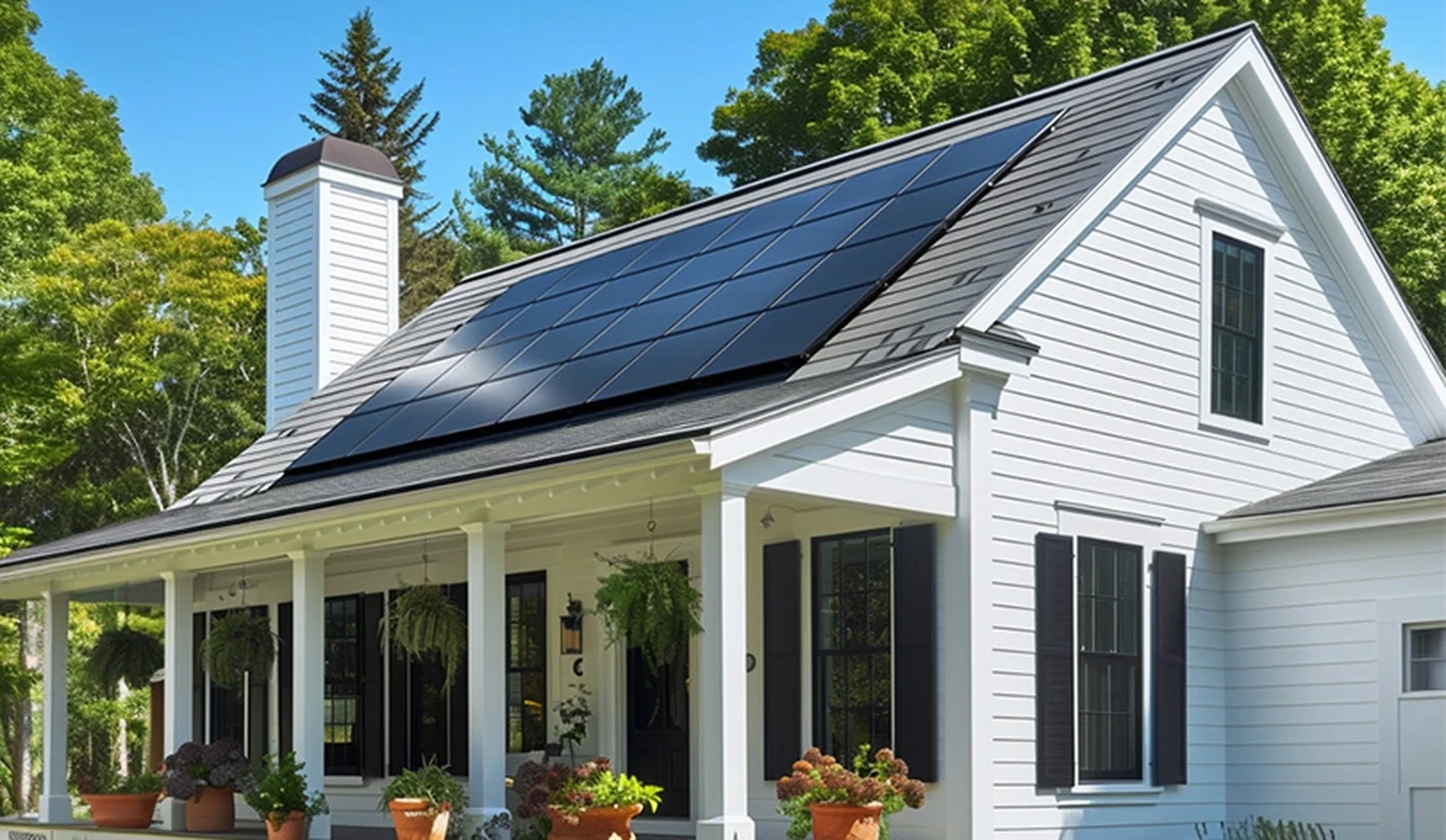
Want to go solar while keeping your cash free for other priorities? Solar leases make that possible. You get solar panels on your roof with no money down, someone else handles any maintenance that might arise, and you start saving on your electric bills from day one. Sounds pretty straightforward—and in many ways, it is.
But here's the thing: Solar leases work differently from buying or financing your system, and those differences matter for your long-term savings and flexibility. Whether a solar lease makes sense depends on your financial priorities. If you value keeping your capital available and want a hands-off experience, a lease can work well. If maximizing long-term savings matters most, buying your system outright or taking out a solar loan typically delivers better returns.
“Leasing really came about as a ‘solar for all’ model,” said Erik Holvik, Director of Corporate Development and Strategy at EnergySage. “If your credit isn’t in a great place, or you’re older and looking to retire and don’t want to part with a big chunk of capital, leasing can be a smart move—especially if you’re planning to stay in your home long-term.”
Key takeaways
Solar leases let you go solar with $0 down and no maintenance responsibilities, making them accessible for homeowners who want to preserve capital.
Leases and PPAs still qualify for the 30% federal tax credit, and competitive providers should pass those savings to you as lower monthly rates. That window is narrowing, though: systems generally need to be up and running by the end of 2027 to qualify.
Solar leases typically deliver lower lifetime savings than solar loans or cash purchases, but they offer maximum capital flexibility.
A leased solar panel system can complicate selling your home because the buyer may need to assume your lease, or you'll need to buy out the contract early.
Most homeowners save around $60,000 over 25 years
- Vetted installers
- Unbiased advice
- Completely free
You can think of a solar lease like a car lease: It's a form of third-party ownership (TPO) where you don't own the product that you're paying for. Under a solar lease, a third-party owner (typically a solar company) installs solar panels on your property and then sells you the electricity produced at a predetermined monthly rate. Companies calculate this rate based on the estimated annual production of your solar panel system and include this rate in your contract. Your lease will also have a fixed term length, typically 20 to 25 years.
In most cases, you can buy the system outright at its fair market value at the end of the contract—though this price isn't always as low as sales materials might suggest, so it's worth reviewing the exact buyout terms before signing. Similarly, early termination often means expensive fees that can negate your savings, so going in with a long-term mindset matters.
Federal solar tax credit changes
The economics of solar leases shifted in 2026. When the federal solar tax credit expired for purchased systems after December 31, 2025, solar leases (and power purchase agreements) became the only residential solar installations that still qualify for the credit—even though it goes to the solar company, not directly to you. Competitive providers should pass those savings along as lower monthly rates, which puts leases on a more level playing field with ownership than they've been in the past.
That window is narrowing, though. Unless a provider started construction on a project before July 5, 2026, which some did by buying equipment in advance, the system generally needs to be up and running by the end of 2027 to qualify. If you’re considering a lease, ask your provider whether your system qualifies for the credit and how that’s reflected in your rate.
Solar leases vs. power purchase agreements
You've probably heard the terms solar leases and power purchase agreements (PPAs) used interchangeably. While similar, the critical difference is that with a lease, you'll have a fixed monthly payment, whereas with PPA, you'll purchase the power generated by your system at a fixed price per kilowatt-hour (kWh).
Essentially, the key difference between a solar lease and a PPA is that with a solar lease, your monthly payments are predictable over the lifetime of your contract. With a PPA, your monthly payment will vary depending on how much electricity your system produces. If a consistent monthly payment is more helpful for your budget, a lease makes more sense for you than a PPA.
However, if anything goes wrong with your system, with a solar lease, you could be stuck paying for power you're not receiving until your provider sends someone out to fix it.
Pre-paid solar leases
Pre-paid leases are gaining traction as the solar financing landscape evolves. Instead of paying monthly, you pay the full lease cost upfront at a discounted rate, then take ownership of the system after a defined period—typically around six years.
As mentioned, solar leases and PPAs still qualify for the commercial solar tax credit, though it goes to the solar company, not directly to you. Competitive providers should pass some of those savings along to you in that upfront lease price. In the first half of 2026, the average price per kilowatt-hour of a prepaid lease on EnergySage was 39% cheaper than a cash purchase. But federal rules require the company to retain ownership for at least five years to avoid tax credit recapture, which is why most contracts set the transfer window at six years.
After that period, many contracts allow you to take ownership for little to nothing. Many pre-paid products can also be financed with a solar loan, so you don't need tens of thousands of dollars in cash to get started.
A few important nuances to keep in mind: Contracts typically reference "fair market value" at the time of transfer rather than explicitly guaranteeing $0—a gap between what's often marketed and what's legally locked in. In practice, many companies honor the $0 transfer, but this area of the market is still maturing. Also, to qualify for the commercial tax credit, pre-paid systems must comply with foreign entities of concern (FEOC) restrictions that limit equipment sourced from certain foreign manufacturers. These provisions are particularly consequential for solar projects, as much of today's solar equipment and materials come from countries like China, which is classified as a FEOC. As companies adapt to these market changes, these sourcing constraints may drive up equipment costs for leases and PPAs.
Most importantly, make sure to read the full contract carefully, not just the sales materials.
Solar leases vs. solar loans
Solar leases and solar loans are similar in that they both offer zero down payment options, which means you don't need to have thousands of dollars saved up to go solar. Here's where they differ:
Ownership: You maintain ownership of your solar panel system with a solar loan, but you don't with a solar lease. Owning your panels with a solar loan means that you can take advantage of any available state and local rebates and incentives upon installation. With a solar lease, the system's owner is the solar company, so they receive financial incentives instead. Lifetime savings with a solar loan are usually higher than those with a solar lease—but it can depend on the specifics of each agreement.
Maintenance: If you choose a solar lease or PPA, the leasing company owns the solar panel system and typically offers a service program to cover any maintenance issues that arise during the lease term. On the other hand, if you take out a solar loan to purchase your system, you'll be responsible for its maintenance. But in either case, solar is a generally low-maintenance power source, and the equipment you buy with your solar loan should have warranties that range from 10 to 25 years.
Monthly payments: Payment terms differ slightly between leases and loans. In a loan agreement, you usually have a fixed monthly amount due. With solar leases, many contracts include an annual escalator that increases your monthly payment by a preset rate over your term length (typically 1-3% each year). Look for providers offering low or zero escalators—these can significantly impact your long-term savings.
As with any solar financing option, solar leasing comes with its share of pros and cons:
Advantages of solar leasing | Disadvantages of solar leasing |
|---|---|
| Saves money on electricity | Lower lifetime savings compared to ownership |
| $0 or low upfront costs, start saving immediately | Annual escalators can eat into savings |
| No maintenance responsibilities | May complicate selling your home |
| Indirect access to federal tax credit | Can't claim any incentives directly |
| Capital flexibility | Less control |
Pros of solar leases
Cons of solar leases
Will a solar lease save you money?
With a competitive provider, yes—a solar lease should save you money. But how much depends heavily on your contract terms, your current electricity rates, and how those rates change over time.
Here’s how this might play out for a 10.5 kW solar panel system in a state like Massachusetts over 12 months, assuming the system covers 100% of the household’s electricity usage and the lease comes with a 20% discount compared to the average cost of electricity in Massachusetts ($0.30/kWh).
Month | Solar system production (kWh) | Lease payment | Electric bill without solar ($0.30/kWh) | Monthly savings |
|---|---|---|---|---|
January | 530 kWh | $230 | $345 | $115 |
February | 634 kWh | $230 | $311 | $81 |
March | 945 kWh | $230 | $276 | $46 |
April | 1,107 kWh | $230 | $242 | $12 |
May | 1,303 kWh | $230 | $242 | $12 |
June | 1,429 kWh | $230 | $276 | $46 |
July | 1,476 kWh | $230 | $345 | $115 |
August | 1,337 kWh | $230 | $345 | $115 |
September | 1,026 kWh | $230 | $242 | $12 |
October | 784 kWh | $230 | $207 | −$23 |
November | 669 kWh | $230 | $276 | $46 |
December | 288 kWh | $230 | $345 | $115 |
Total | 11,528 kWh | $2,760 | $3,452 | $692 |
Over a full year, you’d pay $2,760 for your lease, about $692 less than the $3,452 you’d otherwise pay your utility company. Because your lease payment stays the same while your electric bill rises and falls with the seasons, you’ll save more in some months than others.
Generally speaking, leases save less over their lifetime than solar loans or cash purchases. But the gap has narrowed since the residential tax credit expired, and for homeowners who value capital flexibility and zero maintenance hassle, the trade-off can be worth it. The key is finding a provider with genuinely competitive terms—not all solar lease companies are created equal.
When you're comparing solar lease providers, these factors will have the biggest impact on your long-term savings and overall experience:
Also, keep in mind that solar leases aren't available in every state, and some providers have limited geographic coverage.
Comparing popular lease providers in the U.S.
Palmetto | Sunrun | Momentum | |
|---|---|---|---|
| Products | LightReach | BrightSave Monthly, BrightSave Prepaid | Solar lease |
| Model(s) | Lease, PPA | Lease, PPA, prepaid lease | Lease |
| Term | Varies | 20-25 years (varies by state) | 25 years |
Solar leases are worth considering if you want to go solar without tying up capital in your roof. They're particularly appealing for homeowners who don't have a large enough tax bill to benefit from state tax credits, or those who value simplicity and don't want to handle maintenance responsibilities. If you want indirect access to federal tax incentives through lower monthly rates and plan to stay in your home for the duration of the lease term, a lease could work well for your situation.
On the other hand, solar leases might not be the best choice if you want to maximize long-term savings and have access to financing. They can also complicate things if you plan to sell your home in the next 5-10 years, since the buyer will need to assume your lease or you'll need to buy it out early. If you prefer full ownership and control over your energy system, or can benefit from state and local solar tax incentives by owning your system, a solar loan or cash purchase will typically serve you better.
It's best to compare all solar financing options and decide which trade-offs align with your financial priorities. Even if you're leaning toward one option, we recommend gathering quotes for both solar loans and solar leases so you can see the numbers side-by-side.
Most homeowners save around $60,000 over 25 years
- Vetted installers
- Unbiased advice
- Completely free
Related articles



Avoid peak rates and keep your essentials running, even when your street loses power.
